How pros use PULSE and what it means for the rest of baseball
I argue the core tenet of Driveline Baseball is this: if we can measure it, we can improve it.
That is at the root of the scientific process which founder Kyle Boddy helped usher into 21st century pro baseball with Driveline, the sport’s most influential garage startup.
Why did velocity start increasing? The portable radar gun allowed its measurement, and velocity-training was then accelerated by the uniform MLB pitch-tracking systems that demonstrated the performance benefits of velocity gains beyond a reasonable doubt.
When we can track something, we can create a feedback loop. We can then monitor what improves a system or player, and what makes it worse.
We have since seen what data-based feedback loops mean for pitch design, bat-speed, and bat-path training.
We have even begun to embed a real-time feedback loop within command tracking at Driveline. with Intended Zones Tracker, pitchers like Janson Junk are pioneers enjoying massive benefits.
Data is the lamppost that illuminates the way.
So, where is the game still lagging in data-based breakthroughs? Injury prevention. That frontier remains the Holy Grail, and little progress is being made.
Yes, a big part of that is because pitchers are throwing with record velocity, which is producing incredible force on their elbows and shoulders. But it’s difficult to envision an incentive created that compels pitchers to try and reduce skill level instead of improving it.
Consider what Tejay Antone, a long-time Driveline client, told me recently for a profile documenting his remarkable comeback from a third Tommy John surgery.
“When you really flip the script and you say, ‘OK, why are you wanting to throw harder?’ Well, that’s because the athlete wants to play the next level, whatever level they’re at,” Antone said. “Hard throwers get more opportunities. It’s not unfortunate, but it is inevitable… That trickles down to the minor leagues and moves down to college baseball, and that trickles down to high school baseball. So, up and down, in the game of baseball, just throwing harder, you got a lot more opportunities.
“So, now, when people are saying, ‘Well, you don’t need to throw hard to get outs’ — it’s like (that logic) is from 30 years ago.’”
Pitchers are going to continue to try and throw harder. All incentives point that way. As Charlie Munger once said: “Show me the incentive, and I’ll show you the outcome.”
What that means is we need a lot more data regarding workload and usage from the youth level, as I’ve explored with Deven Morgan, to the professional game.
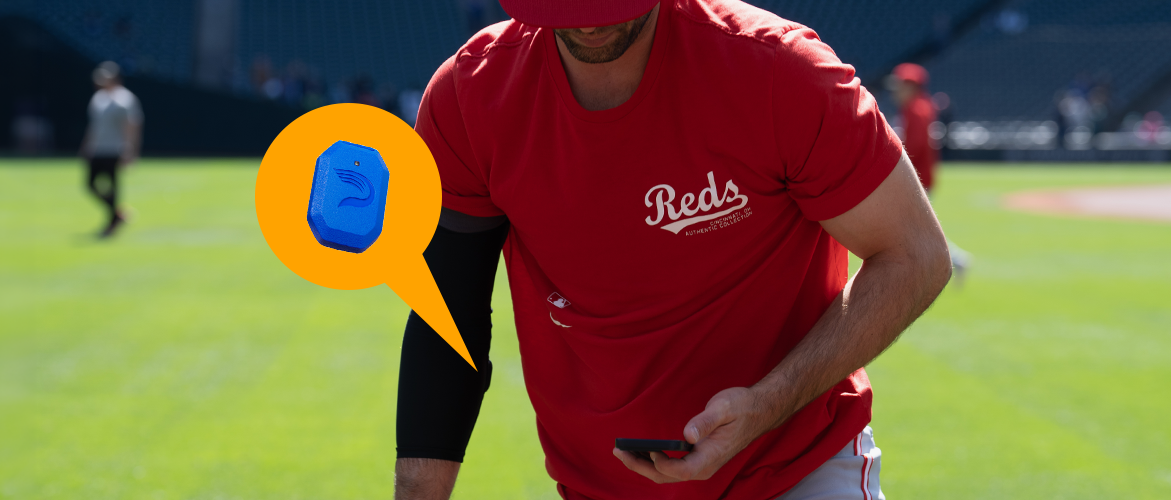
And that’s where our PULSE technology comes in, workload tracking technology that monitors stress and fatigue.

To understand how it’s used at the highest level, I spoke with two of its longest-tenured users in Antone and Tampa Bay’s Nick Martinez.
What does Martinez like about the technology?
“I can completely maximize my performance,” said Martinez of using PULSE. “It starts in the offseason with PULSE. Casey writes my progression. Knowing I have the (proper) workload plan to lead into competition without any worry is huge.”
No worry. At the very least, less worry – much less worry – for PULSE users.
The data and workload tracking allow pitchers peace of mind and confidence, and that’s before even getting to the meat of the value.
“I one hundred percent (subscribe) to using it throughout the season,” said Martinez, who’s been deployed in a hybrid role in recent years. “It’s given me the ability to go from starter to reliever without putting a dangerous amount of stress on my arm.
“I’m now very efficient in catch play. And then if I’m strictly a starter (like this season), I can play around with my in-between starts (workload), leading into a start. Maybe there’s a day where I can take a step back, or a day when I throw more if I know I need to work on something… Or if you are a reliever it can mean you know you are able to go three days in a row, or, you need a day.”
“It’s given me the flexibility to do what I need to get done at a very efficient level.”
If you are unfamiliar with the tracking device, it accounts for the stress of every type of throw and employs insights from our database to show overall workload and stress. PULSE data and feedback informs throwing programs and allotment guides.
For more color on workload units, consider the pieces we published on building up to a Nolan Ryan season-long-like workload, and estimating what Yoshinobu Yamamoto’s arm stress was in the World Series last fall.
With PULSE, pitchers are no longer searching in the dark, relying on how they “feel” alone to guide throwing volume. That is not to say pitchers should not incorporate “feel” into the overall assessment, but the sport is screaming out for objective guardrails.
“It keeps you accountable on those catch days,” Martinez said. “A lot of guys, they throw until they are tired, or they feel good today so they say ‘I am going to throw a little bit more.’ When in reality, they should have kept it at a medium workload: they should have kept it around 10 (level), and it shot it up to a 15 or 17. That’s going to lead to some fatigue on the day you are supposed to perform. It keeps guys accountable on days between starts.”
In other words, it eliminates guess work.
It’s those days between game performance when pitches often are not rigorously tracked when PULSE is such an important guide. (And that’s even before considering how imperfect pitch counts are.)
Antone is back on a major league mound after a third Tommy John surgery. He is relying on PULSE to monitor his arm care.
“I love spinning the ball every day, and I think that PULSE is something that holds me accountable,” Antone said. “When I first put the PULSE on, my recovery days were supposed to be something pretty low: three, four, or five (workload units). But what I was coming out with were nines and 10s. I was like ‘What is this?’ And then I understood I was making 30 throws and spinning the ball 10 times. It keeps me accountable.
“The other thing I like is the chronic workload, and understanding I have an allotment… I have my own Google spreadsheet I put my numbers into. ‘Is it smart to go back-to-back, should I take a day off?’ And I can kind of play with those numbers. For example, I threw last night (earlier in June) – usually when I pitch it’s around a 30 (workload unit) so I put another 30 in there.”
Antone does not believe injuries can be reduced to a zero. But in understanding his own elbow ailments, he does believe information, technology and adaptive training practices can begin to reduce them.
Consider how many injuries are tied to the spring, when elbow and shoulder injuries spike. It suggests pitchers are not building up properly too often, that they are flying blind, and that the injury wave could at least be flattened – and reduced – with better understanding.
“I think teams will have better data to make better decisions. Just with technology we will see improvement,” Antone said. “I don’t think you can get rid of injuries. The throw is happening so fast. On any given throw you can get injured. The UCL tears with 35-40 Newton-meters (valgus torque)… You are exerting 90 plus Newton-meters of force on your elbow (with a pitch). At any moment, you could get injured. I don’t think injury rates are going to zero, but you can lower the rate of them for sure.”
And while major leaguers ought to want to collect as much information as possible, there’s so much more opportunity at the college and amateur levels where there is far less data collection. It’s there where there is even more opportunity to better keep arms healthy and productive.
We examined this spring how PULSE and workload data can help optimize college pitching staffs.
“I think a lot of guys – especially guys with not as much experience – are going on with cookie-cutter throwing programs when no one throw is the same,” Martinez said. “One throw for me might be a different stress level for someone else. It might take someone more throws, or less throws, to reach a certain workload… It changes how I throw in the offseason, and how I progress.”
More pitchers need to gather data on themselves. We need more data as an industry to begin attacking, and solving big problems. We need a lot more data. We need PULSE.
Comment section