
Posts Tagged seattle mariners

Stuff to Read: 9/12/2011 (Steve Delabar Story, Jason Vargas THT Post)

Steve Delabar’s journey to the major leagues with the Seattle Mariners is a feel-good story anyone could love, right?

Maybe not. Think about it: Why didn’t organized baseball have a velocity development plan for Steve to get him back to where he needed to be? Why did Steve need to explore alternative options by himself to break back into professional baseball?

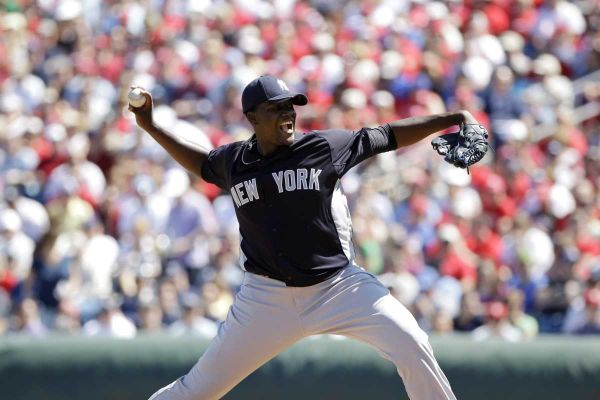
Steve Delabar

I wrote about this on my latest short article at The Hardball Times – Steve Delabar: How Organized Baseball Failed Him. Go check it out.

Additionally, there’s also my longer article about Jason Vargas and “The Twist” that he added to his mechanics. It seems to have added some fastball velocity for him, so I broke it down a bit at The Hardball Times.

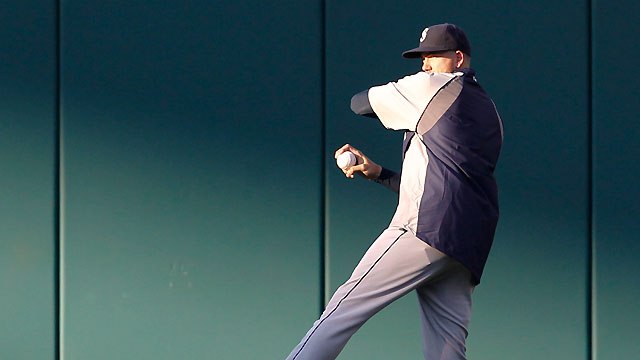
Jason Vargas - Comparison

A related article from The Hardball Times that I wrote is The Fear of Unorthodoxy: A New Model of Player Development. It talks about Trevor Bauer’s unorthodox training methods and how “weird” it looks for him. With 43 strikeouts in 25.2 innings pitched in minor league baseball this year (albeit a high ERA due to one bad outing), it’s looking like the “strange” training methods Trevor used are serving him just fine.

, , , , , , , ,

3 Comments

Mariners “No-Weight” Training Room – A Nonsensical Lie

It seems as though I hear about the Seattle Mariners lack of weight lifting in their new training program about once a week. This myth is complete garbage, and it’s perpetuated by training facilities in the Pacific Northwest like WBI Sports. They even run a banner that claims that weights have been removed from the Mariners training facility! Don’t believe me? Take a look here:

WBI Sports Banner

WBI Sports Banner - Completely False!

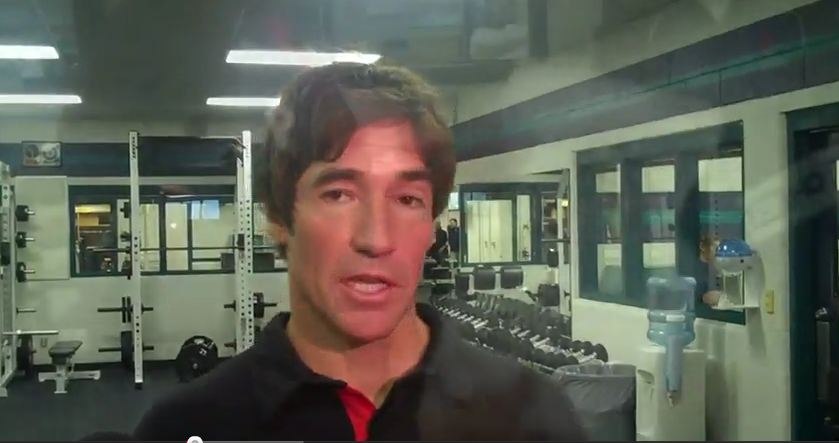
No weights in the weight room, you say? Then what’s in the background of the Seattle Mariners’ spring training facility?

Mariner's ST Weight Room

Mariner's ST Weight Room

Let me tell you exactly what’s in the background: Weights. Specifically:

  • Power Cages
  • Olympic Barbells
  • Olympic Weight Plates
  • Dumbbells (and a large rack to store them on)
  • Weight Benches

And this is just what we can see in the shot. There might even be… MORE WEIGHTS!

You can find that shot in this video about Dr. Marcus Elliot’s training program for the Mariners.

Additionally, we have athletes at our facility that have trained under Dr. Marcus Elliot and can confirm that they have done basic barbell lifts in addition to other ballistic activities like medicine ball throws and high-speed cable rotational work.

So, WBI Sports (and many other training facilities with a misguided agenda) are either spreading blatant lies or haven’t done their research. In either case, I’m not sure why you would send someone to train there – the best case scenario is that they haven’t done a full evaluation of what professional players are doing. The worst case scenario is that they are intentionally lying about the Mariners’ program to cover up the fact they haven’t invested money into a solid strength/power/speed training facility like Driveline Baseball has, or they don’t have the trainers to set up such a facility and corresponding program.

Please, Stop Spreading Garbage Rumors

That’s all I ask of places like WBI Sports. It’s very plainly evident that Dr. Marcus Elliot’s programs are well-designed, and this means a program that involves compound lifts to effectively and quickly develop basic levels of strength before moving on to more complex programming. It does not mean you should omit weight lifting from your baseball training program – always double-check your facts, especially when someone has a vested interest in selling you a product or service.

Driveline Baseball trainers actively encourage their clients to ask questions and do their own research to see if the Elite Baseball Training program matches up with their expectations and that it will get them to their end goal: A higher level of baseball. We’ve incorporated a lot of client suggestions into our workouts and programming as a result.

, , , , , ,

No Comments

THT Article: The Velocity Loss Phenomenon

I know everyone here reads my Hardball Times articles – and is subscribed to my THT RSS feed – right, right?

Well, just in case you forgot that I write there, you can check out my latest article titled The Velocity Loss Phenomenon. My article talks about Trevor Bauer, Dylan Bundy, and their “unorthodox” training methods that got them to where they are – and why it scares big league teams off.

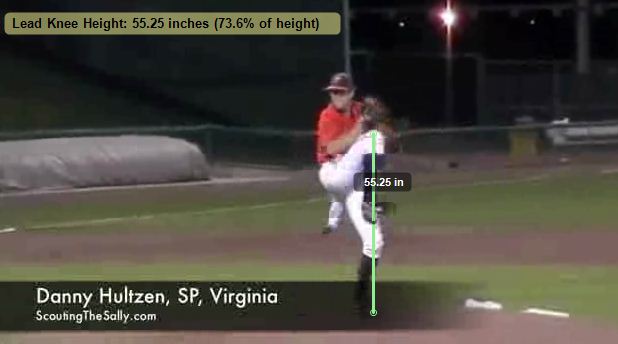
In the near future, look for an article on crude biomechanical analysis as applied to the 2nd pick overall in the 2011 MLB Draft: Danny Hultzen of the Seattle Mariners (formerly the University of Virginia).

Here’s the teaser image:

Danny Hultzen - Maximum Knee Height

Danny Hultzen - Maximum Knee Height

But you have to subscribe to my RSS feed or pay close attention to THT for it!

, , , , , , ,

No Comments

Doug Fister, Velocity, Strikeouts, and Hard Work

Seattle Mariners’ starting pitcher Doug Fister is well-known for being a soft-tossing righty who gets guys out as a control/command pitcher. Except, in 2011, that’s not necessarily true. Fister’s average fastball velocity is up over 1 MPH in 2011 when compared to 2009 and 2010, and this doesn’t even control for the fact that pitchers as a whole have slower fastball velocities in the early months of the season. (Nor does it control for weather, which plays a role – and we’ve had inclement weather this year.)

Geoff Baker of the Seattle Times interviewed Doug Fister briefly, where Fister said:

“I have been putting in a lot of work in the weight room,” Fister said. “I’ve spent a lot of time lifting, conditioning and throwing. So, yeah, I feel a lot stronger this year. I’m in good shape. We’ll see where it takes us.”

On Monday’s start, Doug Fister’s four-seam fastball was around 91-93 MPH and not 88-90 MPH. What’s the difference between those two numbers? A huge jump. Fastball velocity does not follow a linear curve; the difference between an 88 MPH fastball and a 93 MPH fastball is not the difference between an 80 MPH fastball and a 85 MPH fastball. It’s a much larger – and more effective – improvement. Fastball velocity is positively correlated with strikeout rate at the major league level, and so every tick a pitcher can pick up makes a huge difference. It might mean the difference between staying in the big leagues and being demoted to the minors, never to return.

Doug Fister

While we don’t know exactly what Doug Fister was doing for his strength, conditioning, and throwing program, we know he’s been doing more of it. And we also know that the Seattle Mariners use Dr. Marcus Elliot’s programs for many of their athletes, which revolves around free weights, medicine balls, and integrating biomechanical analysis concepts into their training methodologies.

Train Hard, Throw Hard

Pretty simple conclusion – if you train hard, you’ll throw hard. Consider that Doug Fister is an elite baseball athlete already flirting with 90 MPH and yet he was able to add velocity by simple training harder. What kind of improvements can the average prep/college pitcher make if he got on a smart training program and worked his butt off?

, , , , ,

No Comments