How Janson Junk found another level and a higher cruising speed
Even for long-time athletes training at Driveline, there is always something new to learn, something to iterate upon. This constant effort to improve is a key tenet of our culture.
Consider the case of Janson Junk, a Driveline OG.
Back in 2013, the Seattle-area native heard about an iconoclastic pitching guru in the area from his high school teammate, Chris Carns.
Carns’ select team trained at the same facility where Driveline founder Kyle Boddy was renting space. Intrigued, Junk visited and began training with the Driveline founder. There were almost immediate results. Junk’s fastball velocity jumped into the low 90s as a high school senior.
That landed him an offer to pitch for Seattle University. He went on to be selected by the Yankees in the 22nd round of the 2017 draft. He kept beating the odds, iterating at Driveline, and made his major league debut with the Angels in 2021.
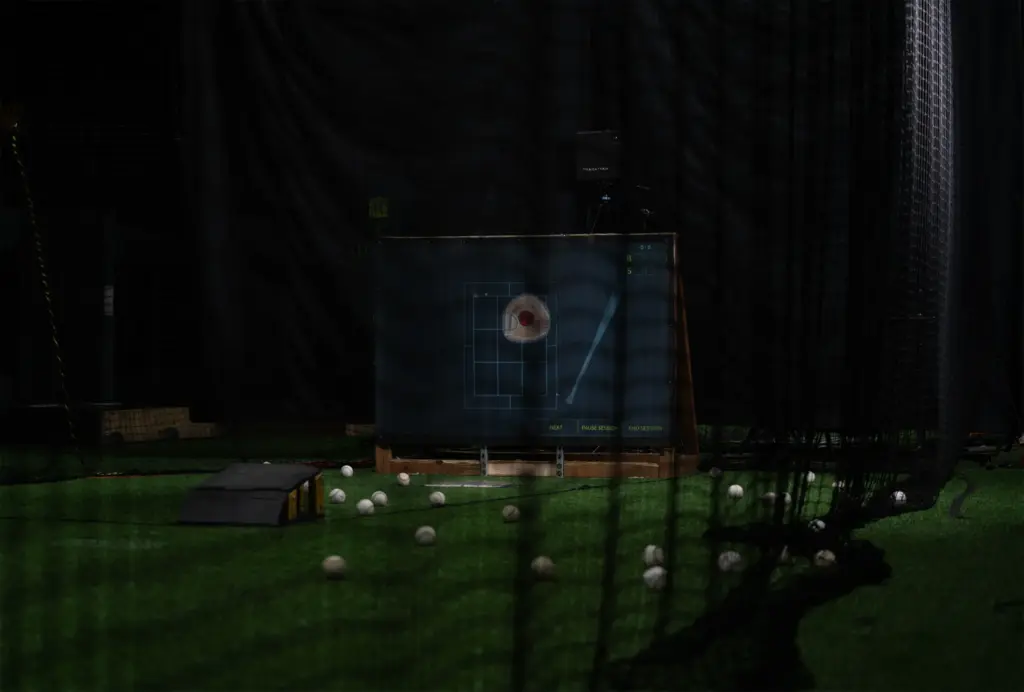
Last winter, he was back at Driveline as something of a guinea pig—the first major leaguer to dedicate a full offseason of throwing bullpens with the Intended Zones tracker measuring his progress. Training with that tech helped lead to a breakout season, establishing himself in the Marlins’ rotation. He enjoyed some of the greatest command improvements in pro ball, cutting his walk rate to 2.9%—the best in the majors among pitchers who tossed at least 80 innings —down from an 8.3% walk rate the season prior.
So, what could Junk improve upon this season? Junk had something he wanted to investigate.
Near the close of last season, a FanGraphs writer asked him about the variability of his arm angle at release—variance he was unaware of then. He declined to answer the question, not to be impolite or difficult, rather, he was unaware it was an issue. He was immediately curious.
“I did feel different when I reached back for that 96, 97 or whatever, it looked different,” Junk told me earlier this month as he reflected upon the question. “I feel like I’m throwing it, you know, sidearm (at high-end velocity)… It felt like I was dropping.”
While he could pop the occasional 96 mph four-seamer, he sat 92-93 mph for the majority of his outings. He was curious if he could cruise nearer his peak velocity. It was important to find another level.
After all, consider the average right-handed starter’s fastball velocity is 95.1 mph this season. In fact, the average is greater than that of right-handed relievers (94.9). If a pitcher is below that benchmark for velocity, he’s already fighting an uphill battle. Junk’s average fastball was 93.6 mph last season.
But there was reason to believe he was leaving meat on the bone.
Pitchers’ ranges of velocity are shrinking during the pitch-tracking era—from a 7.37-mph gap between seasonal individual max and minimum fastball velocities in 2008 to a record-low 4.92-mph range last year. Junk’s range was well above average last year (6.2 mph).
When he arrived back in Seattle after the season, he asked Driveline analysts to investigate. Sure enough, they found he had more variability than the average pitcher in regard to his arm angle at release. It was affecting his stuff, creating a wider range of velocity and movement.
Once those numbers validated the issue, and after completing his usual end-of-season motion capture and strength testing, Junk wanted to immediately focus on reducing the variability. Could he more often access his best stuff?
What he found in the lab was that his arm slot lowered when he rotated faster and moved down the mound in a certain way.
“Before, I felt like I would get stuck, like ‘OK, leg lift, and then drop,’” Junk said of his motion sequence. “I always see my velocity drop whenever I get very mechanical, and kind of slow on the mound. Now, it’s just more like leg lift, and then I’m driving down the mound. It’s ‘How quickly can you move?’… Moving fast is a big cue for me.”
When he moved faster, his arm angle dropped. His efficiency and ability to repeat improved.
To hard-wire the new, faster throwing motion into his muscle memory, there was a package of drills Driveline director of pitching Connor White prescribed.
There were pivot picks—but not just any pivot picks—a variant where Junk focused on using the rotation of his body to pull the arm into his optimal slot. There was a focus on athlete movements such as making throws from a shortstop position.
The change wasn’t built around any magic bullet new drill or exercise; it was driven by a different mix and intensity.
“Ideally, you’re increasing the efficiency, and that’s what we’re working on with guys when we’re in the lab,” White said. “We can optimize movement to raise the ceiling and the floor.”
Junk again threw game-like bullpens with the Intended Zones Tracker measuring his command.
Junk has rolled those gains into the season, lowering his arm slot by four degrees early this season.
“I felt like I was not changing my arm angle, rather, I was changing my trunk (rotation),” Junk explained. “I’m able to rotate more naturally, and the arm just kind of takes this natural path. Now, it’s just kind of more natural, and I’m not even thinking about, ‘Oh, where’s my arm?’ It’s more about just rotating. I’m on plane a little bit better.”
Junk boasts a 2.82 ERA and a 1.04 WHIP through his first seven starts.
He’s coming off an outing allowing just one run against the Phillies, which followed blanking the Dodgers for six innings last week, which was on the heels of yet another gem: shutting out Cardinals for five innings prior to that.

His Stuff+ is improved from below average last season (96) to above average (102) through 33 innings this spring. That’s meaningful given his elite command remains intact (110 Command+).
His average fastball is up a full tick from 93.6 mph to 94.6.
But what’s so interesting about Junk’s season is that his max velocity is not improved. His top capacity is unchanged.
Since the start of last season, he’s registered nine throws of 96.5-plus mph, with six occurring last season. (He set a new personal best max-velocity mark with a 96.9 mph four-seamer on May 4). In other words, his maximum fastball velocity—his max capacity—is essentially unchanged.
Yet, his stuff is a lot better.
How does one increase stuff without new max readings, without increased capacity? His work on reducing variance, improving efficiency, is paying off.
“Getting that cruise control elevated was a big piece for him,” White explained. “It wasn’t that he couldn’t throw 97. He already had that above-league-average fastball in his bag. It was just like, ‘How can we give him more access to it?’”
Velocity bands are tightening in baseball. That suggests there is more max-effort throwing—especially among relievers—which carries risk.
But there is another way to tighten a velocity range as Junk is demonstrating early this season: efficiency. More optimal, and repeatable, throwing mechanics.
Just as an engineer might work to reduce heat waste in a system, there are ways to refine even a seemingly mature arm in Junk.
While White also helped Junk overhaul his changeup, an improved weapon for him this year, the focus on efficiency has allowed him to cruise nearer his top velocity capacity.
“Junk is a guy that can take advantage of pretty much everything we do,” White said. “He’s super bought in across the board, whether that’s the workload monitoring, the Intended Zones usage, the work that he does in the weight room on the strength-and-conditioning side. He’s just a true pro across the board, which makes him awesome to work with, because, then you kind of throw everything at him.”
Even after seemingly taking advantage of everything he possibly could at Driveline, Junk’s curiosity and drive to improve—combined with help from our data, tools, and expertise—is allowing him to reach another level, a higher cruising altitude.
Comment section