
Posts Tagged resistance bands

Pitching Decelerator Exercises

A lot of pitchers prioritize rotator cuff strength to help prevent injury and improve performance on the mound. Probably the most common program for this goal is ASMI’s Thrower’s Ten. Thrower’s Ten involves a lot of basic resistance band work and light dumbbell work in order to strengthen the muscles that make up the rotator cuff – supraspinatus, infraspinatus, teres minor, and subscapularis. I have no problem with these types of programs, but so-called “band work” isn’t all that effective when you think about what happens in the typical pitching delivery. I talked a lot about this in my article “Is Resistance Band Work Overrated?” In that article, I said:

But is resistance band work overrated? That’s a really scary question to ask, and many people (perhaps including you) will have the same kneejerk response: Heck no! I want to make it clear that I believe that resistance band work makes up a lot of what we do at Driveline Baseball – especially with regards to scapular stabilization and mobilization work

Later in the article, I talked about maximum strength training being important for baseball pitchers to help decelerate the arm safely. However, since many athletes are either starting their seasons or are right in the middle of them, it’s tough to train for maximum strength in your in-season training program. Some great postural and mobility exercises that can help develop your pitching decelerators while your in the middle of your season or even in the off-season are:

  • Chin-Ups
  • Pull-Ups
  • Rear Delt Flys
  • Chest-Supported Rows
  • Suitcase Deadlifts

Pulling and rowing variants are king here, since you’re very focused on developing upper back musculature and endurance. If you have a TRX setup, you can do lateral sagittal pulls and unilateral work to develop the trunk musculature that controls trunk lean – barbell work like suitcase deadlifts are great for this as well.

Here’s a few videos of the Rear Delt Fly and the Suitcase Deadlift – two lifts that aren’t very popular but do the job quite well!


Try throwing these in your training program and I’ll bet you see pretty good improvement in stability and you might find yourself going deeper into games as a result.

, , , , ,

No Comments

Proper Warmups For Weight Training

Our baseball athletes undergo a rigorous offseason workout schedule that incorporates a ton of heavy weight lifting – mostly done with barbells, but we use dumbbells for single-arm exercises (rows) and pressing (bench press with the neutral grip and the occasional push press) as well. Most of the athletes that I get come into the gym ready to go wearing shorts and a cotton t-shirt and ask “What’s first, coach?” Assuming that they’ve already passed their initial assessment that all my clients undergo, we talk to them about proper warmup procedures and ask them what they typically do to get ready for lifting some serious weight.

The responses are varied and interesting. Most include basic static stretching, maybe a little bit of running or elliptical trainer work, a few minutes on the Airdyne, and in some exceptional cases, yoga poses and actual dynamic range of motion work. However, no one has come to me and discussed soft tissue quality and/or foam rolling as part of their warmup techniques!

Soft tissue quality is extremely important when maintaining and gaining flexibility/mobility and plays a huge role in “prehab” and rehab operations equally. This topic is worth studying and dedicating a few posts to later on, but for now I’ll just talk about proper warmups that we use at Driveline Baseball to get ready to move heavy weight (which are similar to the warmups we do before batting practice or throwing a bullpen).

First: Foam Rolling / Self-Myofascial Release (SMR)

To me, foam rolling is a no-brainer. Eric Cressey and Mike Robertson wrote a groundbreaking article titled “Feel Better for 10 Bucks” on T-Nation that changed the way I trained athletes (and myself). Here’s a quick excerpt from said article:

It’s also fairly well accepted that muscles need to not only be strong, but pliable as well. Regardless of whether you’re a bodybuilder, strength athlete, or ordinary weekend warrior, it’s important to have strength and optimal function through a full range of motion. While stretching will improve the length of the muscle, SMR and massage work to adjust the tone of the muscle.

I’m going to plagiarize Eric Cressey again and show you a video that he taped that discusses the foam rolling progressions he has his athletes go through. They are very similar and nearly identical to the foam rolling patterns our athletes go through:

Second: Dynamic Stretching / Mobility Work

For many athletes – and especially baseball players -  this involves pounding away at hip mobility. Stronglifts.com has a great article on this topic along with companion videos. Basic stuff like simple leg swings can make a huge difference over the long run:

We also work on ankle mobility and stabilization (a topic I wrote about last month), as this is huge in any squatting pattern. You’ll also find that soccer players and baseball athletes (both pitchers and hitters) will have deficits between their “plant” leg and their free leg. Don’t just work on one ankle – work them both to bring them up equally!

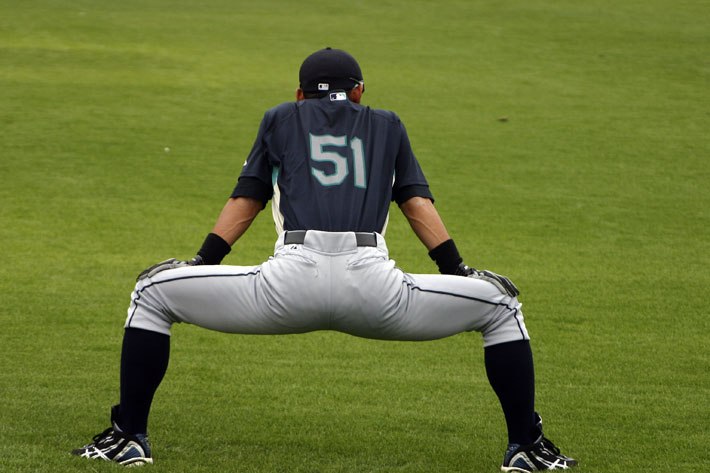
There’s also a bit of static stretching involved prior to our lifts – I know, I know. Static stretching before lifting or power-based movements has gotten a bad reputation. However, like many controversial topics, it has been vastly overblown. Static stretching of the hip flexors prior to squatting or jumping has been shown to improve performance and working the agonist/antagonist relationships (hanging from the chin-up bar prior to bench press, for example) tends to help a lot as well.

ichiro_stretch

One of our favorite static stretches - the "Ichiro" stretch

Third: Band Work

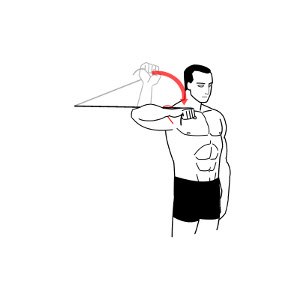
We use resistance bands quite a bit between sets and prior to lifting to get the blood flowing throughout the body and to increase mobility in important areas. We’ll often do some facepulls and general scapular mobility work, X-band walks and other glute activation work, and simple internal/external ROM work for the shoulder.

I hope that this article helps you to think about warming up for weight training – and sports in general – a little differently, and perhaps more seriously. You can pick up resistance bands or mobility/flexibility products from our respective Products pages. Give them a shot – I bet you’ll notice a big difference next time you’re in the gym!

, , , , , , , , ,

2 Comments