

Archive for November, 2009

“Rate of Force Development?”

People often ask me what “Rate of Force Development” (ROFD or sometimes RFD) means in terms of exercise science. Well, the boring and classic definition is:

A measure of the rate at which a force is developed. Rate of force development is measured in newtons per second or newton-metres per second.

Boring, right?

Here at Driveline Baseball, we emphasize ROFD training for our baseball athletes due to the high carryover it has into pitching velocity, bat speed, and overall strength gains. Here’s a brief excerpt of what EliteFTS had to say about it:

Rate of force development (ROFD) is probably the most important and under-recognized area of applied science pertaining to strength training and athletics. ROFD essentially refers to the speed at which force can be produced. Aside from those sports requiring very precise movements (such as gymnastics and ballet), I can’t think of a single example in athletics or lifting that wouldn’t benefit from a faster ROFD. A faster ROFD results in quicker, more explosive movements and gets the bar moving sooner.

Let’s take a look at an example. Let’s say two people (lifter A and lifter B) are attempting a 500-lb deadlift. Both are capable of producing 500 lbs of force, but lifter A has a significantly faster ROFD. It may take lifter A two seconds to produce enough force to get the bar moving off the floor and four seconds to lock it out at the top. Lifter B, with an inferior ROFD, takes four seconds to get the bar moving off the floor and six seconds to get it to his knees. He reaches failure before locking out at the top.

Louie Simmons (the creator of “Westside” training) emphasized “dynamic effort” training in all three of the traditional powerlifts – the squat, bench press, and deadlift. He advocated training not only for maximum strength (typically using 2-4 sets across of 4-6 reps at near-maximal weights), but also for power (ROFD) by increasing the sets, decreasing the reps, and increasing the speed at which the workout is done. For example, I currently have a 5-rep maximum (5RM) back squat of around 360 pounds. In a typical “volume” workout, I’ll do 3 sets of 5 reps at 360 pounds for a total of 15 reps in about 20-30 minutes depending on rest periods. An alternative to that volume workout could be 10 sets of 3 reps at 225 pounds – squatting to an 11″ box (below parallel) and exploding upwards after my butt makes contact to the box! Rest periods are kept to a minimum – perhaps 60 to 90 seconds between each set. This helps to develop power and ROFD which then carries over to heavy maximum strength lifting.

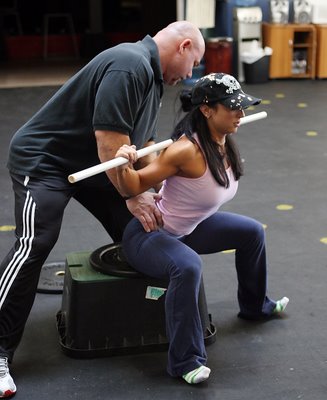
Box Squat

A box squat - a bit high, but you get the point.

Hopefully this short blog post helps you to understand what Rate of Force Development is and how it can help you on the baseball diamond and in the weight room. And last, but not least, here’s an outstanding example of power and ROFD in my favorite weightlifter (Pyrros Dimas, Greece) in the 1996 Olympics where he won a gold medal:

, ,

No Comments

Measuring Hip Internal Rotation

A big thanks goes out to Eric Cressey, who answered my question about how to measure Hip Internal Rotation using a goniometer.

We use the goniometer all the time at Driveline Baseball and we look forward to more accurately measuring HIR to check for imbalances in our athletes!

,

No Comments

New Equipment at Our Facility!

I’m happy to announce that we just added a full massage table and some more corrective exercise equipment to our Seattle facility for our baseball athletes! It will now be much easier to measure internal/external rotation of the hips and shoulders to check for rotation deficits and to provide corrective exercises and techniques to help address those problems.

, , ,

No Comments

Strength Training for Youth Athletes

I often get this question: Should youth athletes get into a strength training program? The answer: YES!


Cms-image-000020336_medium

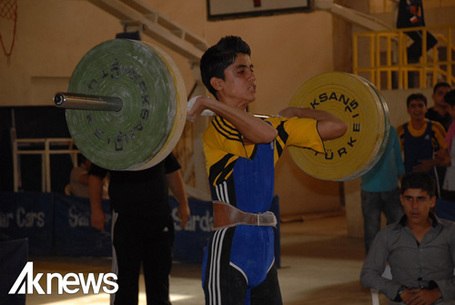
Youth weightlifting – if properly designed – is perfectly safe and produces solid results. I often hear the tired myth of “Weight lifting too early can stunt growth.” Not a single research study has corroborated this statement with medical evidence. In an article written by John A. Bergfeld, M.D. (of Cleveland Clinic fame), he said:

Despite the previously held belief that strength training was unsafe and ineffective for children, health organizations such as the American College of Sports Medicine (ACSM), The American Academy of Pediatrics (AAP) and the National Strength and Conditioning Association (NSCA) now “support children’s participation in appropriately designed and competently supervised strength training programs.

Later in the same article, he said:

As far as what age a child should start such a program, here is a good rule of thumb: If 7- or 8-year-olds are ready for participation in organized sports or activities such as little league or gymnastics, then they are ready for some type of strength training program. For children starting out in weight training, lifetime fitness and proper exercise techniques should be emphasized. Adults designing training programs should provide a stimulating environment that helps children develop a healthier lifestyle.

Avery D. Faigenbaum, EdD, CSCS corroborated Dr. Bergfeld’s research and statements.

So please, let’s put this myth to rest. While it is true that it is probably best to train athletes when they start to produce testosterone (puberty) to reach ideal results, weight training before then does not endanger their growth plates or bones – they will simply see results much slower than an athlete who is going through puberty will. For youth athletes under the biological age range of 13-14, special care should be taken to address their recovery cycles and closely supervise their novice training protocols; a linear progression model works best, but weight should be added sparingly and much slower than in athletes who have begun to enter puberty.

, , ,

No Comments

Our Other Website

Be sure to check out our other general baseball blog at Driveline Mechanics. We discuss pitching/hitting mechanics, sabermetrics, and general discussion about MLB!

, , ,

No Comments