
By at .

Posts Tagged fangraphs

Locating Up in the Zone – Better for Amateur/Recreational Pitchers

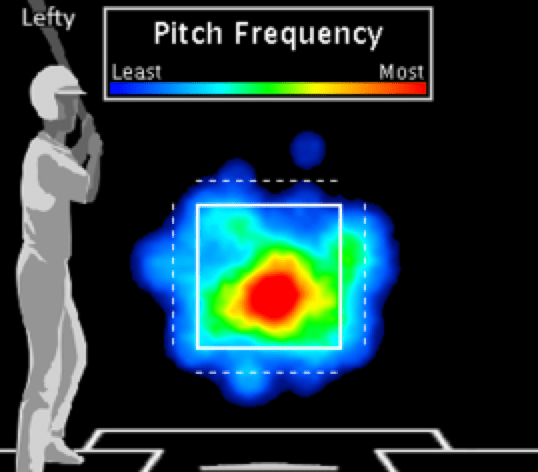
Pitchers at all levels of the game are told to locate their pitches in the bottom half of the zone so they can get hitters to swing over the top of the pitch and produce ground balls. As everyone knows, ground balls are the best way to prevent runs, since you can’t hit ground balls over the fence and it’s tough to hit them into the gaps for extra bases. Apologies to all coaches of youth, high school, and many college pitchers, but: You’re wrong. Pitchers should locate their fastballs and breaking balls in the top half of the zone to get the most success when competing against average youth, high school, and most college hitters.

Ground Balls: Be Careful What You Wish For

It’s happened to everyone – including me - you get a ton of ground balls, your defense boots the ball around, you end up giving up 1 or 2 earned runs but a plethora of unearned runs. When your coach comes and pulls you from the game, he says: “Nothing you could have done, kid. Defense just didn’t play behind you,” pats you on the butt, and tells you to get your running in.

Kyle's May 14th Start

Bad luck. Or was it?

Your teammates apologize for booting that easy ball in the hole, for not picking that ball at first base, and dropping that easy double play opportunity. Being a good teammate, you say “Ah, it happens. Get ‘em next time.” Then while running your poles, you reflect on how particularly unlucky you were that day. If only Bobby hadn’t lost that ball in the sun and Roger didn’t sail that ball from shortstop, you would have gotten out of that long inning. But were you unlucky? Think about it: You did everything you were supposed to – get a few strikeouts, not walk too many, and got a lot of ground balls. And what were you rewarded with? Hasn’t this happened before? What if you got fly balls instead? Don’t hitters swing and miss on your fastballs up in the zone – and when they make contact, don’t they often go for fly ball outs? How many home runs does the entire school have, anyway? Four? But what’s the team batting average – .380? Here are the two major reasons you want to get ground balls at the MLB level:

  1. Sluggers often hit fly balls over the fence.
  2. Defense at the MLB level is insanely elite.

Think about those reasons for a minute. Do either of those reasons apply to your high school league? What do you think the average HR rate on fly balls is in your league? I guarantee it’s not 11%. (MLB Average HR/FB rate.) We’ve already established defenders at the HS/College level are orders of magnitude worse than the Dominican and Venezuelan infielders of MLB (to say nothing of the local product), so why are you applying a heuristic to a completely different game?

Tons of data and a shattered myth after the jump… Read the rest of this entry »

, , , , , , , , , , ,

2 Comments

Why Have I Lost Fastball Velocity?

Pitchers at all levels can lose fastball velocity – the meal ticket – over a season and wonder to themselves: What’s the deal? If you’re one of those pitchers who is seeing a drop in velocity despite no mechanical changes and no apparent injury, I have a very simple answer for you: You don’t work hard enough in-season.

Consider what Cy Young winner Felix Hernandez does to prepare for his starts during the MLB season:

He’s special in that he plays long toss every day, and it’s not even the normal long toss. It’s almost an extreme long toss. He probably throws the baseball about 280 to 300 feet. For the most part you see guys go out — the longer guys — 200 feet, maybe 225 feet. In his case, he throws the ball with a lot of height — he really gets a lot of air under it — and what he’s accomplishing is not only strength, but also extension. It’s a bit far, but hey, you can’t argue with the success he’s had.

(source: Fangraphs)

If you want to reach your ceiling for fastball velocity, you need to throw a LOT of fastballs. This concept doesn’t seem hard to understand, but it’s often overlooked by pitching coaches in an attempt to “protect” a pitcher’s arm. I’ve seen recommendations on baseball forums to not lift weights the day after you pitch and not to throw too much in-season to conserve the bullets in the arm. This logic is exactly backwards, and it leads to more arm-related injuries and decreases in effectiveness/velocity rather than protecting a pitcher.

Felix Hernandez

Tell this guy he's not allowed to work hard.

Human physiology doesn’t work the way the proponents of “rest” think it does. Humans have the amazing capacity to adapt to many different types and frequencies of stress. Pitchers should gradually throw more and more frequently and with more volume as they can tolerate it, and ideally should be throwing a baseball six days per week – including in-season work – to develop the necessary fitness and endurance to compete at the highest level.

Throwing – not pitching – more frequently does many good things:

  • Conditions and develops the structures in the pitching arm
  • Helps the developing pitcher work on his mechanics to feel the changes necessary to throw harder
  • Aids in improving control

If all you do as a pitcher is throw one bullpen session and one start per five days, you’re missing out on development opportunities to improve.

You must learn to throw the ball before you can adequately pitch it, and you can’t develop that ability without throwing in a non-competitive situation – and this includes bullpen sessions.

, , , , ,

2 Comments