
Archive for June, 2011
4 Great Reasons To Throw Weighted (and Lightweight) Baseballs
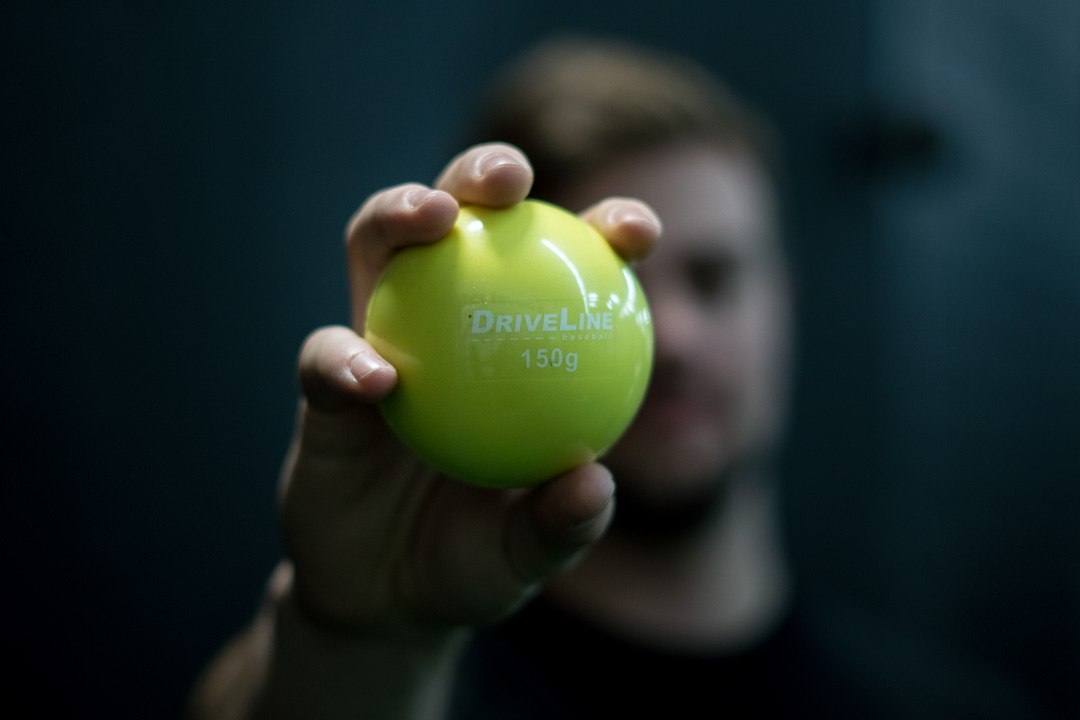
We use underweight and overweight baseballs here in our throwing program to develop velocity for the majority of our trainees going through our Elite Baseball Training program. I’ve talked about weighted baseballs in the past with a basic program sample, but it’s important to note that the correct program will vary depending on the athlete’s age, training status, injuries, current velocity, and various other factors. Simply picking up a set of modified baseballs and throwing them 3-4 times a week is probably a bad idea, especially if you haven’t built up a reasonable base of strength instead.
With that in mind, here are four great reasons to integrate weighted (or overload/underload) baseball throwing into your training program:
#1: Underweight Baseballs are Safer to Throw
Underweight baseballs have been shown to produce superior elbow angular velocity and shoulder angular velocity but profile with similar kinetic loads on the shoulder and elbow. (Source: ASMI) This dispels the popular myth that lightweight baseballs are more dangerous to throw!
#2: Underweight Baseballs Train Faster Arm Speed
In the ASMI source above, you can read that lightweight baseballs produced higher elbow/shoulder angular velocities with higher ball velocity. This helps to train the arm to move faster and develop quicker arm speed! Proprioceptive sense can be developed as a result to help the athlete learn a different biomechanical pattern to produce better velocity with a standard baseball in competition.
#3: Overweight Baseballs Help Condition the Arm
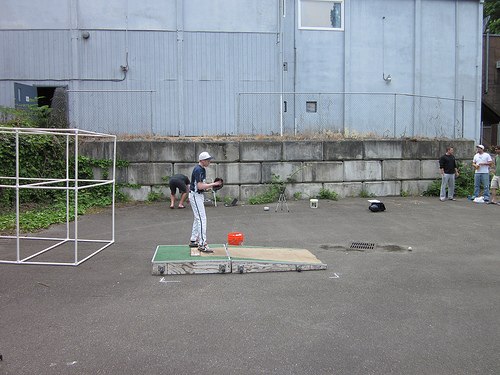
Weighted (overload) baseballs will decrease the kinematics of the throwing motion while likely increasing the kinetics on the shoulder and elbow joint. In doing so, you can help move across the speed-strength continuum to generate a different physiological response in the tissues responsible for accelerating – and more importantly, decelerating – the baseball. There are a lot of drills that can be done with heavy baseballs, like 2 lb. ones. Here’s a simple kneeling drill that we do:
#4: Under/Overload Training Simply Produces Higher Fastball Velocities!
Dr. Coop DeRenne’s research backs this up time and time again. Using a simple Google search, I suggest reading these relevant research papers:
- Effects of General, Special, and Specific Resistance Training on Throwing Velocity in Baseball: A Brief Review (DeRenne et al, 2001)
- Effects of Baseball Weighted Implement Training: A Brief Review (DeRenne et al, 2009)
- Increasing Throwing Velocity (DeRenne, 1985)
- Effects of Under-and Over-Weighted Implement Training and Pitching Velocity (1994)
Enough said!
Things to Read: 6/24/2011
Some notable links from the web:
- Are Deadlifts Enough to Correct Bad Posture? Eric Cressey goes into detail on why the toughest barbell lift out there is one of the best. (Weird relationship, eh?)
- You Fail Because You Don’t Practice (Or Know How to Practice). A favorite post of mine that gets plenty of traffic; it breaks down why people don’t succeed.
- Do You Believe in Jose Bautista? An outstanding article by Joe Posnanski about Bautista’s transformation and how he became a frightening force in the batter’s box.
How Research Plays a Role at Driveline Baseball
We pride ourselves on trying to keep up with all the latest research in biomechanics and kinesiology as it relates to baseball athletes. Most traditional coaches out there have little to no knowledge of published research on pitching biomechanics, but at Driveline Baseball we think it’s important to stay on top of both the research being done in the labs and the work being put out in the trenches of the strength and conditioning community.
Additionally, we’re currently planning research studies for Fall 2011 of our own, including more tests of our Biomechanical Video Analysis services. Few coaches out there can say that they are using a biomechanical lab to complete their own research on pitching mechanics.
Here’s a short list of selected research papers we’ve read, digested, and have helped form our theories on how we coach and train pitchers.
- Biomechanics of Pitching (Zhen, Fleisig, et al – from the Biomedical Engineering Principles in Sports textbook)
- Baseball Throwing Mechanics as they Relate to Pathology and Performance (Whiteley, 2007)
- Biomechanics of Pitching with Emphasis upon Shoulder Kinematics (Dillman et al, 1993)
- Biomechanics of the Shoulder in Youth Baseball Pitchers (Sabick et al, 2005)
- Correlation of Throwing Mechanics With Elbow Valgus Load in Adult Baseball Pitchers (Aguinaldo et al, 2009)
- Humeral Torque in Professional Baseball Pitchers (Sabick et al, 2004)
- Kinetic Comparison Among the Fastball, Curveball, Change-up, and Slider in Collegiate Baseball Pitchers (Fleisig et al, 2006)
- Pitching Biomechanics as a Pitcher Approaches Muscular Fatigue During a Simulated Baseball Game (Escamilla et al, 2007)
- Relationship Between Throwing Mechanics and Elbow Valgus in Professional Baseball Pitchers (Sabick et al, 2002)
- Valgus Torque in Youth Baseball Pitchers: A Biomechanical Study (Sabick et al, 2004)
- Coaching Baseball Pitchers (Marshall, 2009)
See more over at our Research Studies page.
The Fallacy of Hard Work
I get it a lot from potential clients:
- “I’m interested in working hard to play college baseball.”
- “I definitely have the desire to play pro ball.”
- “I will do what it takes to make it at the next level.”
Except that the majority of people who say this have no idea what it will take to reach these goals. Most are content to come in to the gym 3-4 times per week, lift, take batting practice, and study their hitting and pitching mechanics before going to team practices and games. Certainly these athletes will improve rapidly and become pretty good, as many clients who come through my facility have.
But what it takes to play at the top levels of baseball – be it premier college baseball or professional baseball – takes a kind of dedication that few people have. Most athletes are content to put in what they think is “hard work,” which is basically what I outlined above. I would call that a good starting point and nothing more than that. The moment you classify your efforts as “hard work” is exactly when you stop getting better at your craft.
Consider this excellent article on 2010 1st round draft pick Josh Sale.
It is 6:15 a.m., and Josh Sale is hunting.
While several bleary-eyed teenagers amble into RIPS Baseball Training Complex, the Bishop Blanchet senior is wide awake, ready to work. He walks in with two bats — one metal, one wood — and walks past a row of cages.
Off to one side, large sheets of lined yellow paper are stapled to a green wall. There is a list of times on each sheet, and Sale’s name is written between 6 and 6:30 a.m. five days a week.
He stretches and slips on batting gloves. He steps under the netting of Cage 4 and picks up a T-ball bat. He takes one-handed cuts off a tee. Then he grabs a wooden bat and practices a walk-up approach off the tee.
One step. Two steps. Thwack. Swoosh. The ball explodes into the netting.
Then Aaron Horrocks, Sale’s personal hitting coach, lobs him some underhand pitches. After that, he takes live batting practice.
Josh terrorized amateur pitchers in the Seattle area for years. He was big, imposing, a huge physical specimen with scary bat speed and a picky eye. One of the pitchers here at our facility loves to talk about nearly getting Sale out on a dropped foul ball – only to let up a 400+ foot mammoth home run on a cutter he left over the plate. (Alright, maybe we tease him about it and he doesn’t actually enjoy hearing about it.)
Most thought Sale was a physical freak. But in truth, what made Sale an elite hitter was his dedication – his drive. He took batting practice every morning before classes, religiously followed a strength training program, ate plenty of calories to get big, and sought the toughest competition he possibly could to improve.
Taking batting practice in the morning and working out after school (and then taking more batting practice in the evening) is fun. For about two weeks. But to become the best athlete you can be, you need to repeat that effort for years – week in and week out. It sucks. You’ll hate it at times, because there’s no way you can love deliberate practice all the time.
But if you don’t put forth that kind of effort, you won’t succeed. And if you dare to call it “hard work,” well, you might as well write yourself off. There’s always something more you can do, and there’s always someone outworking you, vying for the same roster spot you want.
You have to let that drive you. You have to be driven to want to beat that guy. Maybe he has better genetics, maybe he was born with more innate talent – that’s not something you can control. If he beats you because of that, so be it. But if he beats you because you got complacent, because he outworked you – you shouldn’t be able to live with that, if you want to call yourself a competitor.
Those are the people we want in our Elite Baseball Training group. We’ll open the cages at 6 AM before school or 10 PM when you get out of work. I’ll throw you batting practice, catch your bullpens, and you can come in on your own to get your heavy lifting done or to take batting practice off our machines. But it has to come from you. I’m not your dad. I’m not your motivator. You need to want it more than anyone else in the area for your own reasons.
If that’s you, we have all the tools you need to develop into an elite athlete. All that’s missing is you and your work ethic.