

Archive for February, 2010

Video: Should Pitchers Overhead Press?

Another great video by Eric Cressey about pressing for overhead throwing athletes – this time, he focuses on overhead pressing. Short and to the point – definitely check it out.


, , ,

No Comments

Video: Fun with a New Training Toy

I’ve wanted a weight sled for some time now, but couldn’t pull the trigger on the expensive ones available on the Internet. The shipping cost is just way too prohibitive. I’ve also wanted some plate holders that snap directly into my power cage, but NY Barbell was sold out of them and would be for months. Total bummer. A friend of mine recommended that I contact some local metal fabrication places to get plate holders done, and I figured “Why not see if someone can clone a weight sled for me?”

I called around, and a week later, I have two plate holders that double as dip bars and a push/pull weight sled to play around with. Here’s my first experience with it – pushing 115 pounds (sled weight: 135 pounds) about 35 yards on wet grass in cross-training shoes.


Really looking forward to making this a permanent fixture in our metabolic conditioning workouts. Now, to manufacture some straps…

, ,

No Comments

Link: Should Pitchers Bench Press?

Another excellent article by Eric Cressey is available here: Should Pitchers Bench Press?

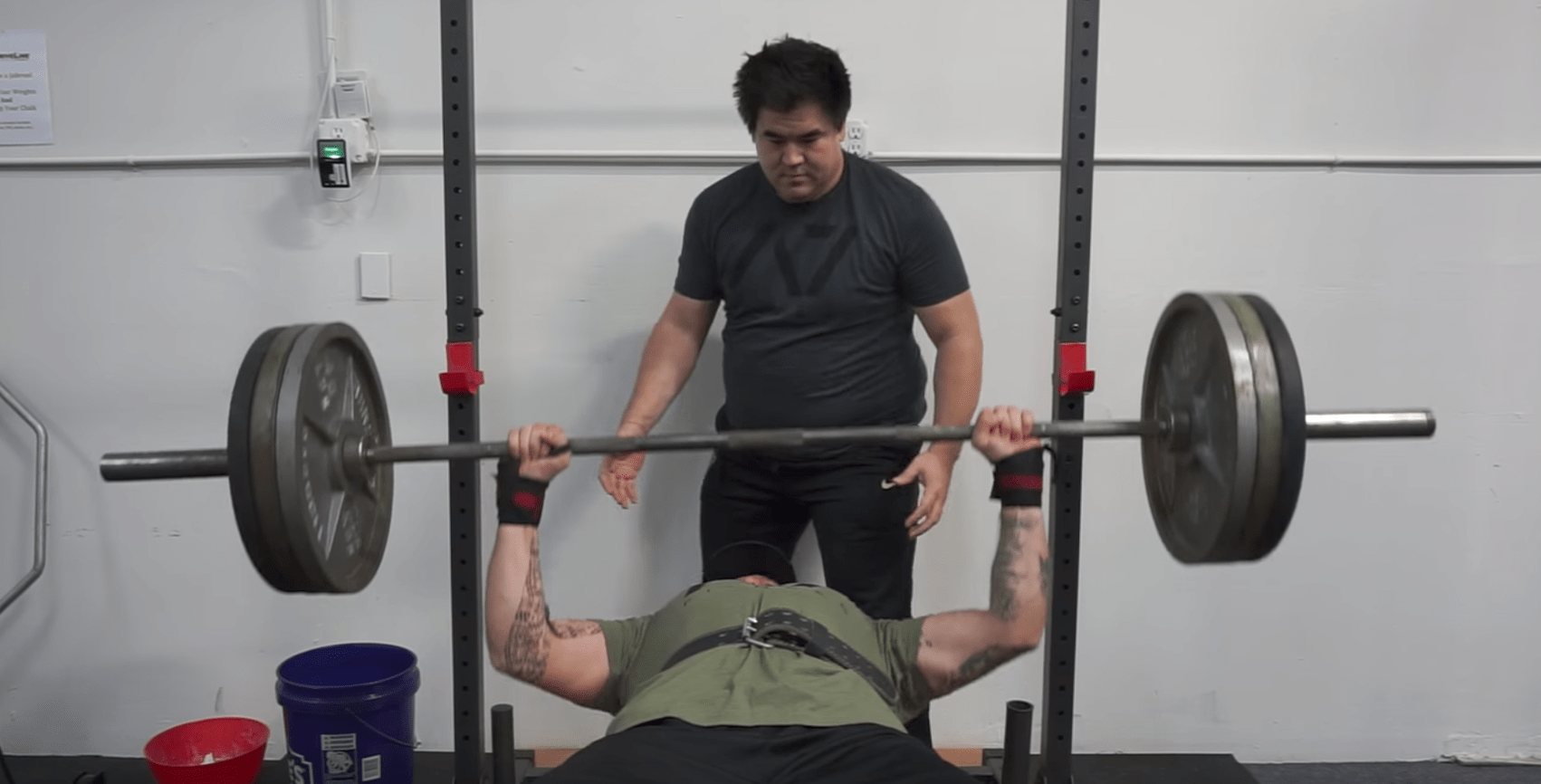
NFL Bench Press at the Combine

The NFL Combine Bench Press - Oh wait, this is a baseball site...

Most of my clients are interested in throwing hard, hitting a ball farther, and developing as a baseball player. However, most of my clients are also high school or college players who have egos and dreams of being able to bench a 225 lb. bar 24 times like Brady Quinn did in 2008. A bad comparison? Not really – consider that Brady Quinn is a quarterback who hasn’t exactly had a lot of success in Cleveland (and yes, his surrounding team isn’t helping much), and at the end of the day, he is throwing a ball for a living. Sound like a position in baseball to you?

At any rate, I understand the desire to have a big straight-bar bench press. It’s the lift that gets the most attention in the gym by men and women alike, and it’s typically the first question anyone asks you when you say that you work out four times a week. (Incidentally, I ask how much they squat – or if I’m being funny, deadlift - and always get a stammering answer.) It builds big pecs and arms and all those other beach muscles that we’re big fans of. However, all of this musculature has very little (if any) carryover to throwing (or hitting!) a baseball hard. Sorry, guys. Here’s what Eric said in his article:

With dumbbell benching, we recognize that we get better range-of-motion, freer movement of the humerus (instead of being locked into internal rotation), and increased core activation – particularly if we’re doing alternating DB presses or 1-arm db presses.  There is even a bit more scapular movement in these variations (even if we don’t actually coach it).

With a barbell bench press, you don’t really get any of these benefits – and it’s somewhat inferior from a range-of-motion standpoint.  While it may allow you to jack up the weight and potentially put on muscle mass a bit more easily, the truth is that muscle mass here – particularly if it leads to restrictions in shoulder and scapular movement – won’t carry over to throwing the way the muscle mass in the lower half and upper back will.  I’ve seen a ton of guys with loads of external rotation and horizontal abduction range-of-motion throw the crap out of the baseball, but can’t say that I’ve ever seen any correlation – in the research or my anecdotal experience – between a good bench press and throwing velocity.

This is exactly why my pitchers use the dumbbell neutral-grip bench press movement as their primary upper body pressing movement in addition to push-ups that are balanced out by chin-ups and pull-ups (vertical pulling is very helpful for pitchers).

So, to all you pitchers out there: While the squat and the deadlift aren’t as sexy as the bench press, they’re simply more useful for sport-specific and general strength purposes. Unfortunately, my guys still love to straight-bar bench press, so we do it once a week. In return, they promise to do a dumbbell neutral-grip bench press day on their other upper body day as well, and bang out a lot of chin-ups and pull-ups along the way. Some of them bench more than I do (which isn’t saying much). But I’ve still got them all in the squat and deadlift. For now.

, , , , ,

No Comments

Proper Warmups For Weight Training

Our baseball athletes undergo a rigorous offseason workout schedule that incorporates a ton of heavy weight lifting – mostly done with barbells, but we use dumbbells for single-arm exercises (rows) and pressing (bench press with the neutral grip and the occasional push press) as well. Most of the athletes that I get come into the gym ready to go wearing shorts and a cotton t-shirt and ask “What’s first, coach?” Assuming that they’ve already passed their initial assessment that all my clients undergo, we talk to them about proper warmup procedures and ask them what they typically do to get ready for lifting some serious weight.

The responses are varied and interesting. Most include basic static stretching, maybe a little bit of running or elliptical trainer work, a few minutes on the Airdyne, and in some exceptional cases, yoga poses and actual dynamic range of motion work. However, no one has come to me and discussed soft tissue quality and/or foam rolling as part of their warmup techniques!

Soft tissue quality is extremely important when maintaining and gaining flexibility/mobility and plays a huge role in “prehab” and rehab operations equally. This topic is worth studying and dedicating a few posts to later on, but for now I’ll just talk about proper warmups that we use at Driveline Baseball to get ready to move heavy weight (which are similar to the warmups we do before batting practice or throwing a bullpen).

First: Foam Rolling / Self-Myofascial Release (SMR)

To me, foam rolling is a no-brainer. Eric Cressey and Mike Robertson wrote a groundbreaking article titled “Feel Better for 10 Bucks” on T-Nation that changed the way I trained athletes (and myself). Here’s a quick excerpt from said article:

It’s also fairly well accepted that muscles need to not only be strong, but pliable as well. Regardless of whether you’re a bodybuilder, strength athlete, or ordinary weekend warrior, it’s important to have strength and optimal function through a full range of motion. While stretching will improve the length of the muscle, SMR and massage work to adjust the tone of the muscle.

I’m going to plagiarize Eric Cressey again and show you a video that he taped that discusses the foam rolling progressions he has his athletes go through. They are very similar and nearly identical to the foam rolling patterns our athletes go through:

Second: Dynamic Stretching / Mobility Work

For many athletes – and especially baseball players -  this involves pounding away at hip mobility. Stronglifts.com has a great article on this topic along with companion videos. Basic stuff like simple leg swings can make a huge difference over the long run:

We also work on ankle mobility and stabilization (a topic I wrote about last month), as this is huge in any squatting pattern. You’ll also find that soccer players and baseball athletes (both pitchers and hitters) will have deficits between their “plant” leg and their free leg. Don’t just work on one ankle – work them both to bring them up equally!

There’s also a bit of static stretching involved prior to our lifts – I know, I know. Static stretching before lifting or power-based movements has gotten a bad reputation. However, like many controversial topics, it has been vastly overblown. Static stretching of the hip flexors prior to squatting or jumping has been shown to improve performance and working the agonist/antagonist relationships (hanging from the chin-up bar prior to bench press, for example) tends to help a lot as well.

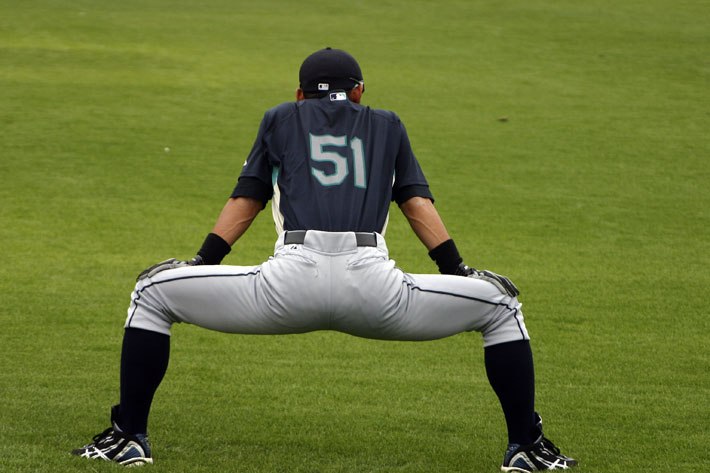
ichiro_stretch

One of our favorite static stretches - the "Ichiro" stretch

Third: Band Work

We use resistance bands quite a bit between sets and prior to lifting to get the blood flowing throughout the body and to increase mobility in important areas. We’ll often do some facepulls and general scapular mobility work, X-band walks and other glute activation work, and simple internal/external ROM work for the shoulder.

I hope that this article helps you to think about warming up for weight training – and sports in general – a little differently, and perhaps more seriously. You can pick up resistance bands or mobility/flexibility products from our respective Products pages. Give them a shot – I bet you’ll notice a big difference next time you’re in the gym!

, , , , , , , , ,

2 Comments

My Recent Reading List

Over the past four years I’ve probably spent hundreds of hours reading research papers (full ones, not just abstracts), medical journals, and derivative materials to gain a better understanding of biomechanics, applied anatomy, and kinesiology as it relates to baseball and exercise science in general.

I’m currently doing a lot of research on how to convert 3d biomechanical models of pitchers (which we will be able to construct soon using software and four high-speed cameras that are being ordered for delivery in March) into usable data that includes things like joint loads and torques. This is a rather difficult task given the estimates that go into the methods, but what’s even more difficult to figure out are the methods themselves! Stuff like this isn’t exactly published for the layman and is typically only read by other professionals in academia, not coaches like myself.

Regardless, I continue on, seeking help on the ASMI message boards and asking multiple people in the industry and academia who are very gracious with their time.

Right now I’m focused on the following two papers and their derivative works (both are freely available):

Some of the research papers that I’ve loved in the past and continue to read over and over again are:

  • Humeral Torque in Professional Baseball Pitchers (Sabick et. al.)
  • Kinetic Comparison Among the Fastball, Curveball, Change-up, and Slider in Collegiate Baseball Pitchers (Fleisig et. al.)
  • Biomechanics of the Shoulder in Youth Baseball Pitchers (Sabick et. al.)
  • Correlation of Range of Motion and Glenohumeral Translation in Professional Baseball Pitchers (Borsa et. al.)

And one of the best papers that shapes the most of my training:

There are many others that I enjoy, but those are my favorite. Give them a shot if you’re got some time and inclination to read source material. A warning, though – it gets addicting to those with inquisitive minds!

, , , , ,

2 Comments