
Archive for January, 2010

Is Resistance Band Work Overrated?

Resistance band work (also known as “tubing”) seemingly makes up the core component of any pitcher’s exercise routine – from the high school athlete right up to the professional big league hurler. Programs like ASMI’s Thrower’s Ten get tons of praise for preventing and rehabbing throwing-related injuries to the shoulder and elbow. It’s often called a “strengthening” program to help your rotator cuff withstand the high forces involved in throwing a baseball, and more importantly, decelerating the pitching arm muscles in a safe manner.

But is resistance band work overrated? That’s a really scary question to ask, and many people (perhaps including you) will have the same kneejerk response: Heck no! I want to make it clear that I believe that resistance band work makes up a lot of what we do at Driveline Baseball – especially with regards to scapular stabilization and mobilization work. An exercise that every athlete does on my program are band pull-aparts:

Eric Cressey recently posted a very interesting article that served as the catalyst for my post – Clearing up the Rotator Cuff Controversy. In it, he said:

1. The true function of the rotator cuff is to stabilize the humeral head on the glenoid (shoulder socket).  While external rotation is important for deceleration of the crazy internal rotation velocity seen with throwing, it’s stabilization that we’re really after. As you can see, the humeral head is too large to allow for great surface area contact with the glenoid.

My feeling is that the bigger muscles – particularly scapular stabilizers, the core, and the lower half - will decelerate the crazy velocities we see as long as mechanics are effective and the deceleration arc is long enough.

2. The shoulder internally rotates at over 7,000°/s during acceleration; that’s the fastest motion in all of sports.  There’s no way that the rotator cuff muscles alone with their small cross-sectional area can decelerate it.  And, to take it a step further, there isn’t much that some rubber tubing is going to do to help the cause…

(emphasis mine)

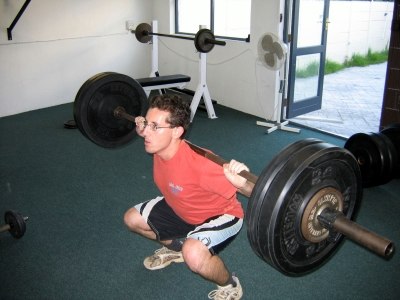
I absolutely agree with Eric, especially the bolded parts. The rotator cuff is very important, but it’s only one piece of the puzzle. That’s why it astounds me when my clients come to me saying that they do a lot of light dumbbell work and pull tons of resistance bands every day, but haven’t done a squat or deadlift in their entire life! Pitchers need to build maximum strength in their lower half and their back; while they can skimp out on pressing movements (and likely should avoid straight bar pressing or overhead presses of any kind during the season), they need to prioritize squats, deadlifts, rows, and pulling variants to develop musculature that will help support the deceleration phase of pitching in addition to adding a few miles per hour onto that fastball!

So, in short, yes, I do think that resistance band / rotator cuff work is overrated. While baseball is coming around to the idea that maximum strength training (with appropriate modifications, of course) is useful, youth athletes typically suffer from their high school coaches’ ignorance of the benefits of training for strength and power. Too many HS athletes go into the season with instructions to pull tubes, throw light medicine balls, and run long distances, and when they break down in-season or even get injured, the coaches just say that they didn’t work hard enough on conditioning!

I’ll say it again: Maximum strength training MUST be prioritized in the months leading up to the baseball season, and pitchers should seek to maintain strength levels as best as possible in-season while switching over to a more injury-preventative program to reduce stress and load during competition.

, , ,

1 Comment

News: WPtouch Theme Installed

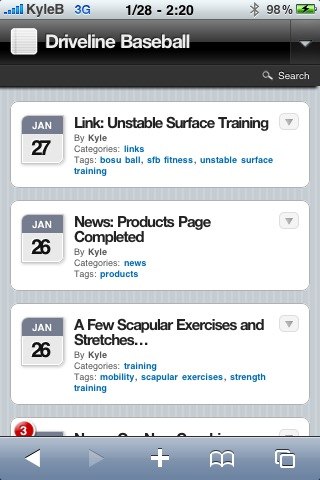
We’ve installed the WPtouch iPhone Theme for iPhone users on our site – this way, when you go to our website, you get something like this:

Our site becomes a bit more usable and compact for our mobile iPhone viewers. Let me know if you’re having problems with the theme. Thanks!

1 Comment

Link: Unstable Surface Training

My friend and colleague Cameron at SFB Fitness has written a great piece on personal trainers and how they implement crazy techniques that impress the average gym-goer but don’t get actual results. The first target of his investigation? Unstable surface training.

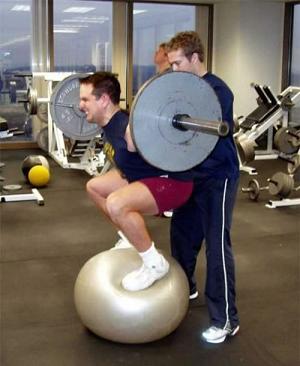
While I have no doubt that Cameron’s whole series will be good, this article in particular is great. Occasionally I’ll go to the local LA Fitness to swim, row on the Concept2 (hey, they cost ~$5000 new!), throw medicine balls in their racquetball courts (that one gets some glares), or shoot hoops with some buddies. I always – and I do mean always – see personal trainers with their clients using the BOSU ball for some ridiculous exercise.

Yeah, I bet this is useful.

Anyway, I don’t want to steal the spotlight. Read Cameron’s article about it, and stay tuned to his website for further additions in the series!

, ,

No Comments

News: Products Page Completed

At Driveline Baseball, we use a variety of tools and products to help our clients achieve their goals – be it a faster 40 yard dash time, higher fastball velocities, better break on their curveballs, more batspeed, even a higher vertical leap! – and I’ve finally put together a page on our site that lists many of the products that we use on a daily basis to help clients meet these goals. You can find this page above on the bar labeled Products and navigate the various categories by using the drop-down or by simply going to the Products page and seeing a list of what we have on our site. Most of the products have free shipping from Amazon.com, so check them out!

We’ll be posting free videos and articles that shows these products in action soon. Keep an eye out for them!

No Comments

A Few Scapular Exercises and Stretches…

A few people have been asking me for good “scapular” exercises and stretches that will help to increase scapular upwards rotation as well as just strengthening the upper back and muscles that attach to the scapula in general. There’s an excellent paper titled “Differences in Scapular Upwards Rotation Between Baseball Pitchers and Position Players” that is well worth reading. For those who want the short version, here’s what the excerpt says:

Conclusion: Baseball pitchers have less scapular upward rotation than do position players, specifically at humeral elevation angles of 60° and 90°.

Clinical Relevance: This decrease in scapular upward rotation may compromise the integrity of the glenohumeral joint and place pitchers at an increased risk of developing shoulder injuries compared with position players. As such, pitchers may benefit from periscapular stretching and strengthening exercises to assist with increasing scapular upward rotation.

The periscapular muscles are:

  • Trapezius
  • Serratus Anterior
  • Pectoralis Minor
  • Levator Scapulae
  • Rhomboids (minor/major)

Here are some examples of stretches and band-assisted exercises that we have our clients do to strengthen and increase the flexibility/mobility of the “scapula”:

Band Pull-Aparts (SPRI Xertube Resistance Bands are perfect for these)

Levator Scapulae and Upper Trapezius Stretch

Face Pulls (do these with SPRI resistance bands, too)

Scapula Push-Ups (the Perfect Pushup is useful for this exercise)

, ,

1 Comment

News: Our New Coaching Facility

I’m happy to announce that Driveline Baseball will be coaching out of the NSBA facility located at 8512 20th Ave NE, just off Lake City Way! We’ll be offering our hitting and pitching instruction out of this facility and soon hope to move our strength and conditioning equipment into the building as well.

You can check out the NSBA’s facility homepage at nsbabaseball.org. Google Maps information is provided below. If you wish to book instruction, please still do this at our website by filling out one of the contact forms – either on our Training page or our general Contact page.


View Larger Map

Thanks for all your support, and we’ll be sure to update you on progress (with pictures, of course) of the facility buildout!

3 Comments

Video: Ankle Mobility Work

This video is an excellent example of how to stretch the ankle and improve mobility in that joint. Ankle mobility is extremely important in both baseball position players and pitchers. Since baseball is such a unilateral sport, players will often have deficits in one ankle but not the other – this is even more pronounced in pitchers. Be sure to keep your heel on the ground, and add this stretch into your routine before and after your workouts, games, and practices.

, , ,

1 Comment

Kinematic Analysis: Wrist to Elbow Relationship

We talk a lot on this blog about training for baseball, but not much about mechanics or the actual pitching motion in general. Today I’d like to take a quick look at one part of pitching mechanics that we study: The relationship between the pitching arm wrist and the pitching arm elbow during the late-cocking phase of the pitching delivery.

Late-Cocking Phase (click for large image)

In the late-cocking phase of the pitching delivery, there are very high forces placed on the shoulder and arm segments as they rotate upwards of 937 degrees/second and 1160 degrees/second, respectively. Part of what can cause the serious forces on the elbow in particular is how the arm lays back in Maximum Shoulder External Rotation (MER).

Billy Wagner at MER

How the arm reaches MER is vitally important – in pitchers with timing flaws, the forearm violently lays back behind the elbow in rapid succession, causing significant torque on the elbow. However, this can be minimized with training and slight mechanical changes, both of which are beyond the scope of this introductory article.

One way we study the relationship between the pitching arm wrist and elbow is to perform a trajectory analysis on a pitcher, measuring the path of the pitcher’s driveline and the rate of change of various arm segments. While I can’t show you any video from my current clients (privacy reasons and all), I can show you some anonymous data from a first-time client that I have handy. This pitcher is a youth pitcher who had his recent entry evaluation with high-speed footage taken within the past month. The chart below details the relationship between the pitching elbow (blue) and the pitching wrist (red). Also shown in the chart are the rates of change (delta) between each time interval (0.00476 seconds, if you were wondering!) as well as the delta between each delta! (Absolute values were used in measuring the rate of change of the deltas.)

Trajectory Chart - Relationship Between Wrist and Elbow

What does this chart tell us? Well, the red and blue numbers are measured in pixels and detail the wrist and elbow’s paths, respectively. In this student’s case, the pitching elbow rapidly outpaces the pitching wrist, causing the forearm to lay back fairly rapidly in MER. The sum of all the deltas in the right-hand column expresses the absolute difference in rates of change between the two segments of the arm and tells us something about timing flaws. While not every pitcher should be within a given range, this is but one more variable that we use to analyze a pitcher’s mechanics and can tell us a lot about how the arm is used.

, , ,

4 Comments

Compound Movements: Use Them!

In your strength training regimen – be it off-season or in-season – you should be prioritizing compound movements. This means full-body exercises that utilize a lot of muscle mass in your prime movers. Good examples include the squat, deadlift, clean, snatch, bench press, press, pull-ups, chin-ups, rows, and many others.

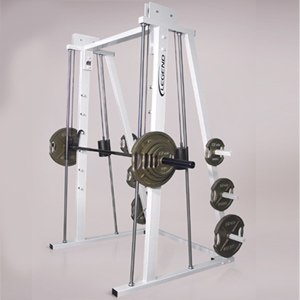
I would like to make it clear that these compound movements should absolutely not be done with machines. By using machines instead of free weights (barbells, dumbbells, plates, kettlebells, etc), you are giving your stabilizer muscles nothing to do; the machine controls the plane of movement rather than your bones, ligaments, tendons, and muscles. Additionally, you get less central nervous system (CNS) response from this type of work. Even worse: These machine-based “exercises” barely transfer over to athletic competition.

Useless.

Staying away from machines is a good first step. However, there are plenty of “bros” in the gym who are doing equally silly things with dumbbells or barbells in order to pump up their “beach” muscles. Exercises like curls, leg extensions, lateral raises, and tricep kickbacks have no place in an athlete’s training program (with few exceptions for intermediate-to-advanced lifters). They simply do not stimulate enough muscle to gain appreciable strength, and the muscles they do work are worked in isolation, rather than an integrated movement.

Does this look like an isolated movement?

Baseball does not use isolated movements in competition. In fact, very few sports do. Effective athletes learn to use their entire body efficiently to produce the most force possible to throw the ball harder, to hit a ball farther, to hit an opposing lineman harder, to jump higher for a rebound, and so forth. Isolating muscle groups has very little carryover to athletic competition – as such, these exercises should be used sparingly or omitted entirely.

Though I said I wouldn’t give out programs or workouts for free, I’ll show you what the offseason training for one of my clients (a HS Varsity infielder) has been over the past few weeks to show you that I practice what I preach:

  • Monday: Back squat (3×5), DB Neutral-Grip Bench Press (3×5), Deadlift (1×5), Chin-Ups (3 sets to failure)
  • Tuesday: Batting cage session
  • Wednesday: DE Box squat (8×3), DB Push Press (3×5), Power Clean (5×3), Push-Ups (3 sets to failure), Light medball work
  • Thursday: Volume medball work, Batting cage session
  • Friday: Back squat (3×5), DB Neutral-Grip Bench Press (3×5), DB One-Arm Rows (2×10), One-Arm Suitcase Deadlift (2×5), Pull-Ups (3 sets to failure)
  • Saturday: Skills day – grounders, flyballs, drills, etc. Agility/sprint training.
  • Sunday: Light medball work and light long toss

On Wednesdays we’ll occasionally substitute the snatch for the clean depending on his progression, and we occasionally do full cleans with a jerk or substitute thrusters for more power output. The above program should be seen as a template that is flexible, but the overall message should not be lost – train for strength and power. It’s also worth noting that we do a comprehensive dynamic warmup with foam rolling (self-myofascial release) and mobility exercises before every workout, and some static stretching after it.

As we get closer to tryouts and the season, he’ll cut out Wednesday’s lifting session in favor of more sprint-based training, skills training, and a long run (2+ miles). I’m not a big fan of distance running for baseball players, but long-range cardio fitness has carryover to athletic competition, and his coach does like to make his players run long distances at practice, so he should be prepared for it – however dumb it may be.

, , , ,

No Comments

Our Influences – Pitching

Lots of people email me and ask me what “camp” I belong to for pitching or hitting or strength and conditioning. I respond that I don’t belong to any “camp” as that would imply that I subscribe to 100% of the views of those “camps.” However, I love to do research and learn from people who have done their own research and experimentation, and so I’ve absolutely been influenced by the work of others. I’ll list a few instructors, coaches, and organizations that I think are credible whose material has made its way into my pitching-specific programming and recommendations in many ways:

Pitching

The National Pitching Association

National Pitching Association

The National Pitching Association (NPA) is a group dedicated to the education of baseball pitchers, their parents, and their coaches, so that they can pitch more effectively, stay healthier, develop a positive mental attitude, and a greater love of the game. The NPA was formed by leading coaches, athletes, and management teams to help pitchers of all ages safely develop to their fullest potential.

I have taken and passed the online pitching mechanics course offered by the NPA, and I own many of their books, including The Art and Science of Pitching.

The Art and Science of Pitching

The NPA is a great place to start your pitching-specific education and includes highly-regarded instructors like Tom House.

Dr. Mike Marshall

Mike Marshall with the Dodgers

Controversial? You bet. Dr. Marshall has reinvented the pitching motion and has been teaching it for years in his Zephyrhills, Florida complex (recently closed). Their pitchers stand facing the batter, step directly straight forward, and utilize a unique arm action that focuses on getting the arm up early and forcefully pronating through release. His training methods include heavy wrist weights, lead balls, and plastic javelins to train his concept of a straight driveline towards the target.

While many will disagree with his methods and his dogmatic ways (and I count myself in this group), to reject all of his ideas because of his personality is a big mistake. Driveline Baseball uses many of the conditioning implements that Dr. Marshall advocates, such as wrist weights, and we believe that some of his theories on pitching mechanics have solid merit.

Eric Cressey

Eric Cressey

Eric Cressey – owner of Cressey Performance – runs an excellent blog available at EricCressey.com that all pitchers and parents of pitchers should follow. He is a former powerlifter, holds an MS in Exercise Science, and wrote the excellent book titled Maximum Strength.

Maximum Strength

Eric’s work in the exercise science field is unparalleled. He has written on topics ranging from Self-Myofascial Release (SMR) to deadlifting to band work for pitchers. His pitchers consistently see major strength and velocity gains, and Eric’s reputation for his tireless work and research is well-deserved.


Those are our “influences” when it comes to pitching-related philosophies and work. We don’t take an equal amount from each, and we certainly read and consider more sources (ASMI is a big one, but we felt it wasn’t applicable as an “influence”) when we develop our programming and concepts for our pitchers.

, , , , ,

1 Comment